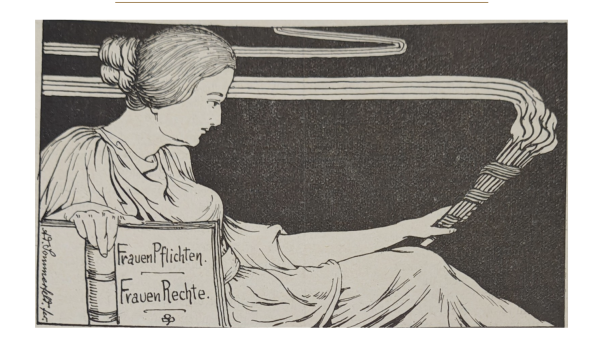
Over the past few years, “tradwife” content has grown from a niche social media trend to become a topic of discussion in mainstream media and culture. Tradwives are associated with idealised images of domesticity, hyper-femininity, and traditional gender roles. Much of the recent media coverage of tradwives has attributed the emergence of this social media phenomenon to the political and economic uncertainty of the past decade. But this focus on the present risks obscuring the fact that tradwife influencers are tapping into a well-established history of the idealisation of domesticity and femininity, particularly in times of social and political upheaval. In this talk, Katherine Calvert (Research Fellow in German Studies) introduces the early twentieth-century German housewives’ movement as a forerunner to today’s tradwives. We’ll discover how lifestyle content, especially food and cookery content, became an avenue for promoting the anti-feminist and nationalist ideologies of the early twentieth-century housewives’ movement, anticipating the strategies employed – and ideas endorsed by – tradwife influencers today.
Katherine Calvert is a Leverhulme Fellow in German Studies at the University of Leeds.
Her current research analyses discourses of emotion in political appeals to mass audiences in Imperial and Weimar Germany. Her wider interests include nineteenth- to twenty-first-century German cultural and literary history, the history of emotions, the German women’s movements, and political print media. She is the author of Modeling Motherhood in Weimar Germany: Political and Psychological Discourses in Women’s Writing.
Date
Tickets
Ticket price
Access
Links